
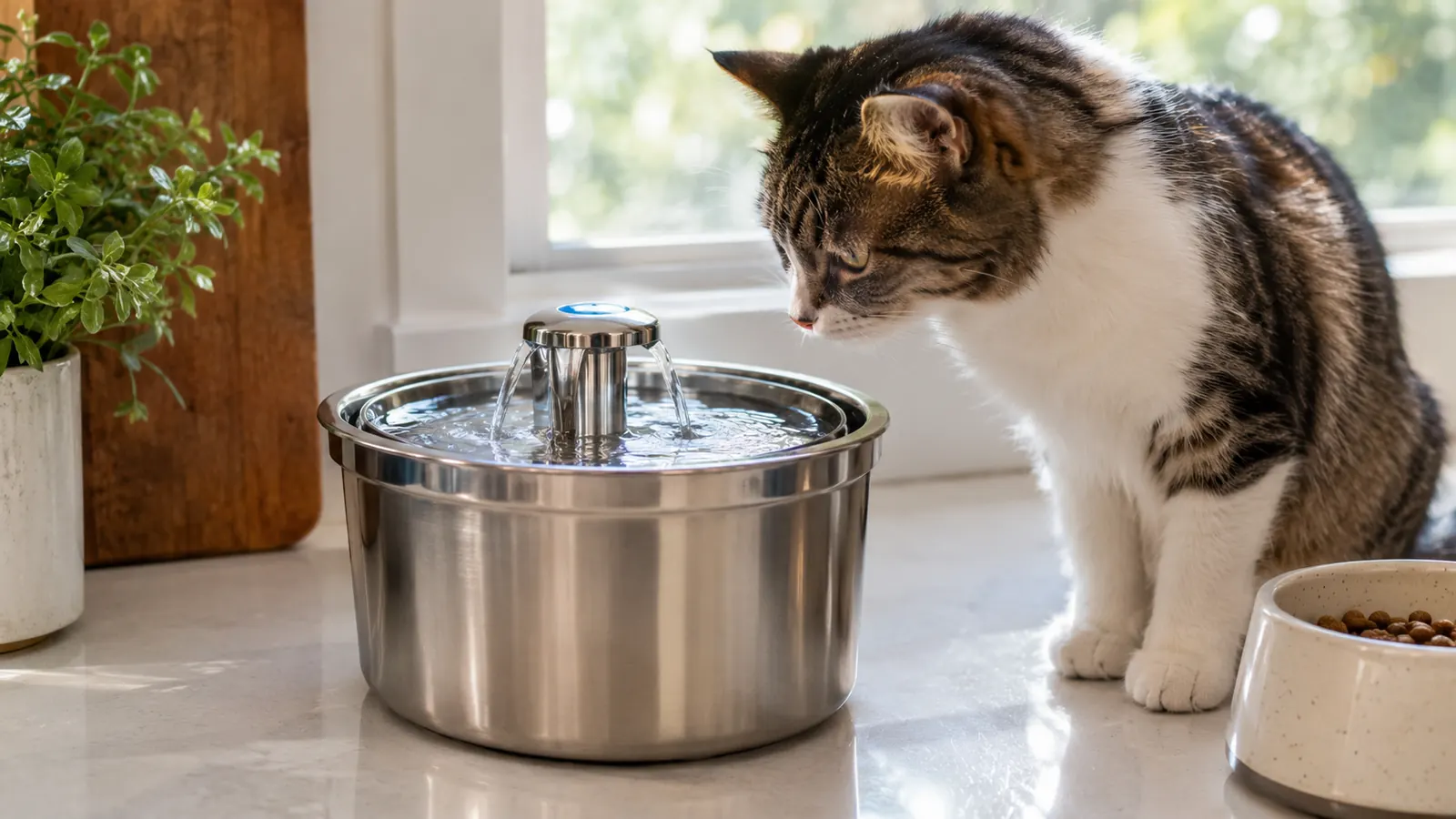
Juniper has always treated her water bowl like a negotiation. Some days she would drink like a normal cat. Other days she would sit next to the bowl, stare at it, and walk away. I would refill it, move it across the kitchen, even try a second bowl in the hallway. Nothing stuck. Then a friend at the clinic mentioned that cats often drink more from moving water, and I started looking at fountains. Months later, the GIOTOHUN stainless steel cat water fountain is the one that earned a permanent spot on my kitchen floor.
I am Odette, I work the front desk at a small animal vet clinic in Allentown, and I have spent twelve years watching cats come in for every kidney and urinary issue you can name. I am not a vet, but I know enough to take my own cat's water habits seriously. Juniper is an 11-year-old gray tabby, about 11 pounds, and she has never been a big drinker. So when I say this fountain changed her daily routine, I mean I watched it happen over the course of a few weeks.
The Quick Verdict
A quiet, sturdy, easy-to-clean stainless fountain that got my picky 11-year-old tabby drinking more water every single day. Worth it for any cat that ignores a still bowl.
Amazon Check Today's Price →A Fountain That Finally Got My Picky Cat Drinking More
Juniper went from ignoring her water bowl to checking the fountain several times a day. If your cat does the same, this is the one to try first.
Amazon Check Today's Price on Amazon →How I've Used It
I have had the GIOTOHUN fountain running in my kitchen since early spring. It sits on the tile floor near Juniper's food bowls, away from the wall so she can walk around it, and I keep it out of direct sun because algae is the enemy of any water source. The fountain holds 74 ounces, which is 2.2 liters, and for a single 11-pound cat that means I am not refilling it every few hours.
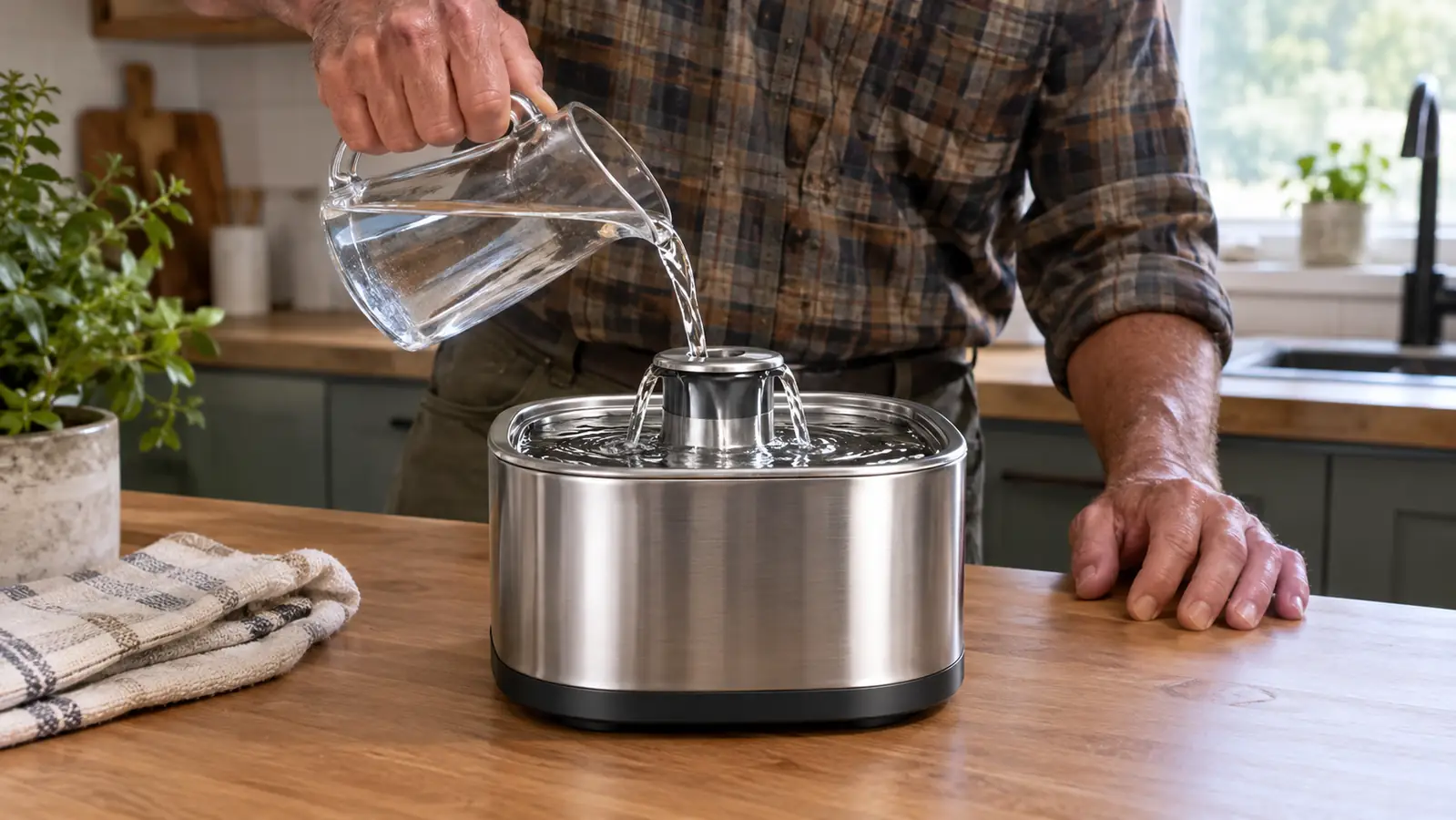
My routine is simple. Every morning I lift off the top, rinse the basin, wipe down the pump with a soft cloth, and refill with fresh tap water. Every three or four days I take the whole thing apart and give every piece a proper wash with mild dish soap. The pump comes apart into three small pieces, the filter slides out of its slot, and the whole process takes me about five minutes. I timed it once because I was curious.
Juniper took to it faster than I expected. The first day she watched it from a few feet away. The second day she crept closer and sniffed the stream. By the end of the first week she was drinking from it two or three times a day, and she still does. That is the part that surprised me most. The novelty did not wear off. Eight months in, she still walks over to the fountain several times a day, drinks for a while, then walks away satisfied.
I wanted proof that the fountain was actually changing her habits, so one Saturday I did a rough measurement. I filled the basin to the same line I always use, and by Sunday night Juniper had drunk a little more than half of it. With her old bowl, she would go through maybe a third of that in the same stretch, and I would still catch her sitting next to the bowl looking at it like she was waiting for the water to do something. It is not a scientific study, but the difference was plain enough that I stopped second-guessing the purchase and started trusting what I was seeing.
Why Moving Water Matters for Cats
Cats evolved as desert animals, so their instinct to drink is weak. That is not an opinion, it is just how their bodies work. They get a lot of their moisture from prey in the wild, and domestic cats carry that same programming. A cat that mostly eats dry kibble and drinks little water is a cat at higher risk for urinary crystals, kidney trouble, and constipation. I see the results of that at the clinic all the time.
Moving water helps for a few reasons. First, it is fresher. Stagnant water grows bacteria and picks up dust, and a cat's nose is far more sensitive than ours. Second, running water is a signal of safety. In the wild, still water is more likely to be contaminated than moving water. A fountain taps into that instinct. Third, the sound and movement simply attract attention. Juniper noticed the GIOTOHUN fountain within a day, which is more than I can say for any of the three ceramic bowls I tried before it.
This matters more for some cats than others. Juniper is a dry-food cat, and she is at the age where I pay extra attention to her kidneys. My vet has told me more than once that the single best thing I can do for an older cat is make sure she drinks enough. A fountain does not replace a vet visit, but it is one of the easiest ways to support a cat's daily water intake at home.
I have seen this play out at the clinic more times than I can count. A cat comes in with constipation or a urinary issue, and the vet asks about water intake. The owner usually shrugs. Then the vet suggests wet food or a fountain, and at the next visit the cat is doing better. I have watched that sequence repeat for twelve years, which is exactly why I took the fountain suggestion seriously when a coworker mentioned it. I had watched other people's cats improve on moving water, and I wanted the same for Juniper, and I was not going to wait for a problem to show up first.
Stainless Steel vs. Plastic and Ceramic
This was my second fountain. My first was plastic, and I replaced it within a year. The plastic developed scratches in the basin that I could never fully clean, and no matter how often I scrubbed it, I was never sure I was getting it truly clean. Scratched plastic is a hiding place for bacteria, and once I started working at the clinic, I could not unsee that. I also had a ceramic bowl phase, but ceramic fountains are heavy, fragile, and harder to find in a size that works for a small kitchen.
Stainless steel solves the problems I actually had. It does not scratch the way plastic does. It does not absorb odors. It rinses clean under warm water, and it looks tidy sitting on my kitchen floor. The GIOTOHUN fountain is also much harder for Juniper to tip. The base is wide and the center of gravity is low, which matters because she is a cat who likes to put her front paws on the edge of her water bowl while she drinks.
There is one thing I have to be honest about. Stainless steel shows water spots and fingerprints more than plastic does. If you are someone who likes a spotless kitchen, you will be wiping this fountain down more often than you would a plastic one. For me, that is a fair trade for a surface I can actually sanitize. I would rather wipe a few spots than wonder what is growing in a scratched plastic basin.
The switch surprised me in another way too. I had assumed stainless steel would feel flimsy or thin, but the GIOTOHUN fountain is solid. The basin has real weight to it, the base does not flex when you pick it up, and the whole thing feels like it will still be sitting on my kitchen floor years from now. My old plastic basin flexed every time I carried it to the sink, and I always worried I was going to dump water down my legs before I got it there. That solid feel is part of why it has held up through eight months of daily cleaning without developing any of the cloudy film my plastic one got.
Cleaning, Noise, and the Day-to-Day Reality
Let me talk about noise first, because it is the question I get most often from friends. This fountain is quiet. At night, when the house is silent, I can hear a very soft hum if I stand right next to it. From the couch, I hear nothing. Juniper sleeps in the same room as the fountain and she has never once been startled by it. The pump is a small submersible unit, and the water flows over a wide lip rather than splashing, so there is no dripping sound to keep anyone awake.
Cleaning is the real commitment, and I want to be straight about it. A fountain is not a set-it-and-forget-it product. If you skip the cleaning, you end up with slimy film on the basin, a pump that gets noisy, and a cat that suddenly stops drinking. I clean mine thoroughly every three to four days and rinse it daily. That sounds like a lot, but the GIOTOHUN comes apart easily and every piece is dishwasher safe except the pump. I have timed the full teardown at about five minutes, and that includes scrubbing the pump pieces with a small brush.
The filter is another cost to plan for. The fountain uses a small charcoal filter that I replace every two to three weeks. They are inexpensive, and a pack lasts me a long time. I keep a spare pack in the pantry so I never have to make a special trip. If you are the kind of person who will not stay on top of filter changes, be honest with yourself before you buy. The fountain works best when the filter is fresh.
I learned what happens when you skip a cleaning, and I will tell you so you do not have to learn it yourself. Around the two-month mark I got busy and let the fountain go a full week without a teardown. The pump started making a low grinding sound, and the stream slowed to a trickle. Juniper noticed before I did. She stopped drinking from it for a whole day and went back to sitting next to her empty bowl, waiting. I took the pump apart, scrubbed the impeller with a toothbrush, and put it all back together. Within an hour the flow was back to normal, and Juniper was drinking again. That day convinced me the cleaning schedule is not a suggestion.
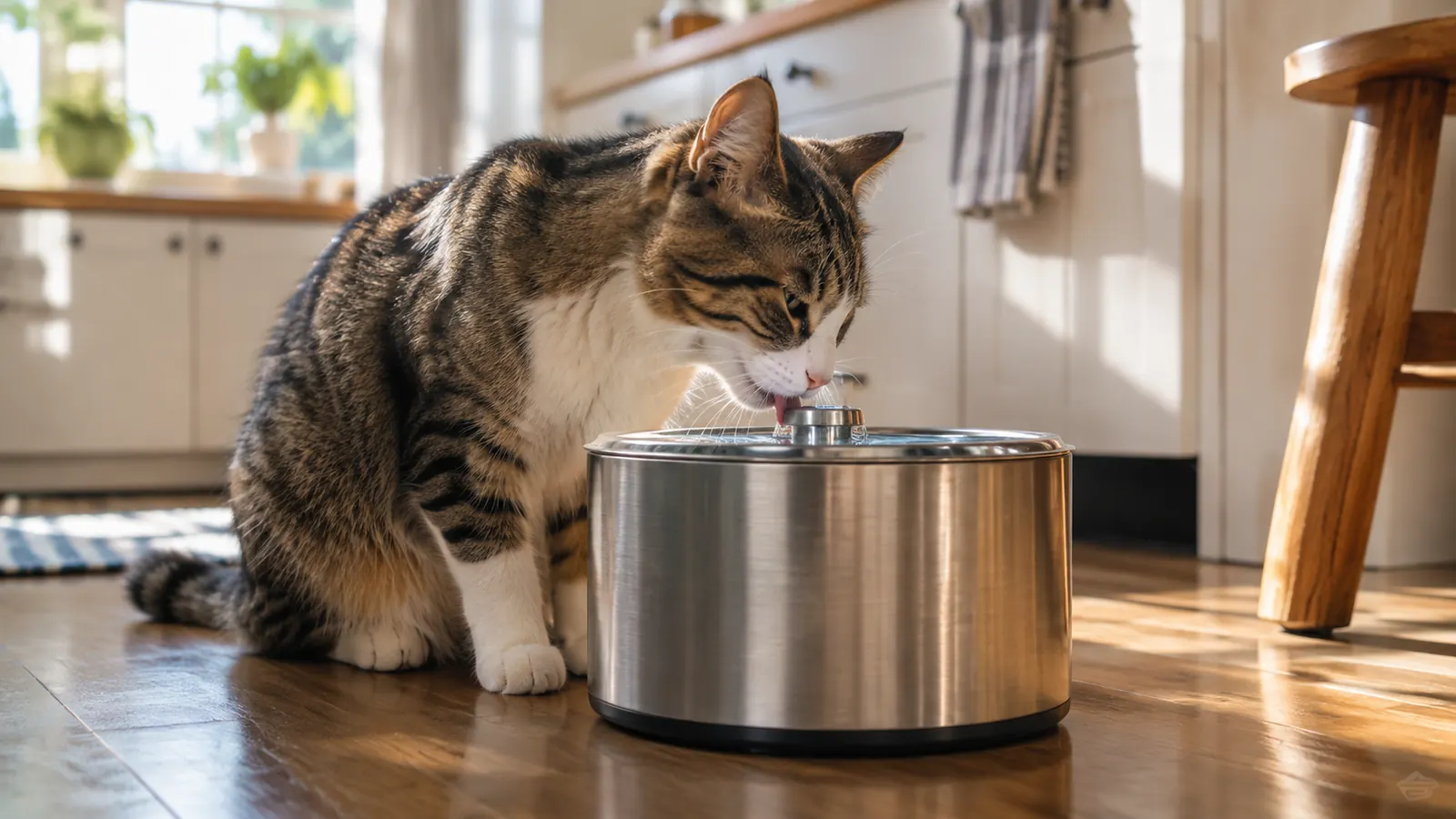
The moment I knew the GIOTOHUN fountain was working was the morning I watched Juniper drink for a full minute straight, something she had not done with a still bowl in years.
What Juniper's Routine Looks Like Now
Eight months in, here is what a normal day looks like. Juniper wakes up, eats breakfast, walks over to the fountain, and drinks. She goes back in the afternoon. She drinks again before bed. I have watched her drink for a full minute at a time, which sounds like nothing until you have lived with a cat who used to take two laps and walk away.
I also noticed a change in how often I am refilling the fountain. With her old bowl, I was topping it off twice a day and still catching her sitting next to it, staring at the water like she was waiting for it to do something. Now I fill the fountain in the morning, and by bedtime she has drunk a noticeable amount. That is the whole point, and it is the reason I would buy this fountain again.
One small detail I did not expect: the fountain is low enough for Juniper to drink comfortably without crouching. She is 11 and a little stiff in the mornings, and the gentle stream at the right height has made drinking easier for her. I cannot prove she drinks more because it is easier, but I suspect it helps.
What I Liked
- Stainless steel basin rinses clean and does not hold odors
- Quiet pump, no annoying dripping sounds at night
- 74-ounce capacity means fewer refills for a single cat
- Easy teardown, most pieces are dishwasher safe
- Sturdy and low to the ground, hard for a cat to tip
- Juniper actually drinks more water every single day
Where It Falls Short
- Needs a full clean every 3 to 4 days to stay fresh
- Filters need replacing every 2 to 3 weeks
- Stainless steel shows water spots and paw prints
- Not ideal for multiple cats; 74 ounces may mean two refills a day
Who This Is For
This GIOTOHUN fountain is for anyone with a cat that ignores its water bowl. It is for dry-food households where the cat's main moisture has to come from drinking. It is for older cats like Juniper, where supporting kidney health matters more every year. It is for people who are willing to spend five minutes every few days taking a fountain apart and washing it. And it is for people who prefer the look and feel of stainless steel over plastic, especially anyone who has ever scrubbed a scratched plastic bowl and wondered if it was really clean.
Who Should Skip It
If you are not going to clean a fountain on a schedule, skip it. A dirty fountain is worse than a clean bowl. If you have multiple cats, especially multiple big cats, 74 ounces may not be enough capacity, and you will be refilling it constantly. If your cat is already a strong, steady water drinker, you may not see a dramatic change, and you can save the counter space. And if you prefer a product you never have to think about, a plain stainless bowl you rinse every day might honestly serve you better. A fountain is a commitment, and it only works if you work with it.
The Fountain That Earned a Permanent Spot in My Kitchen
After eight months, the GIOTOHUN stainless steel fountain is still the first thing Juniper checks every morning. See what it costs today.
Amazon Check Today's Price on Amazon →