
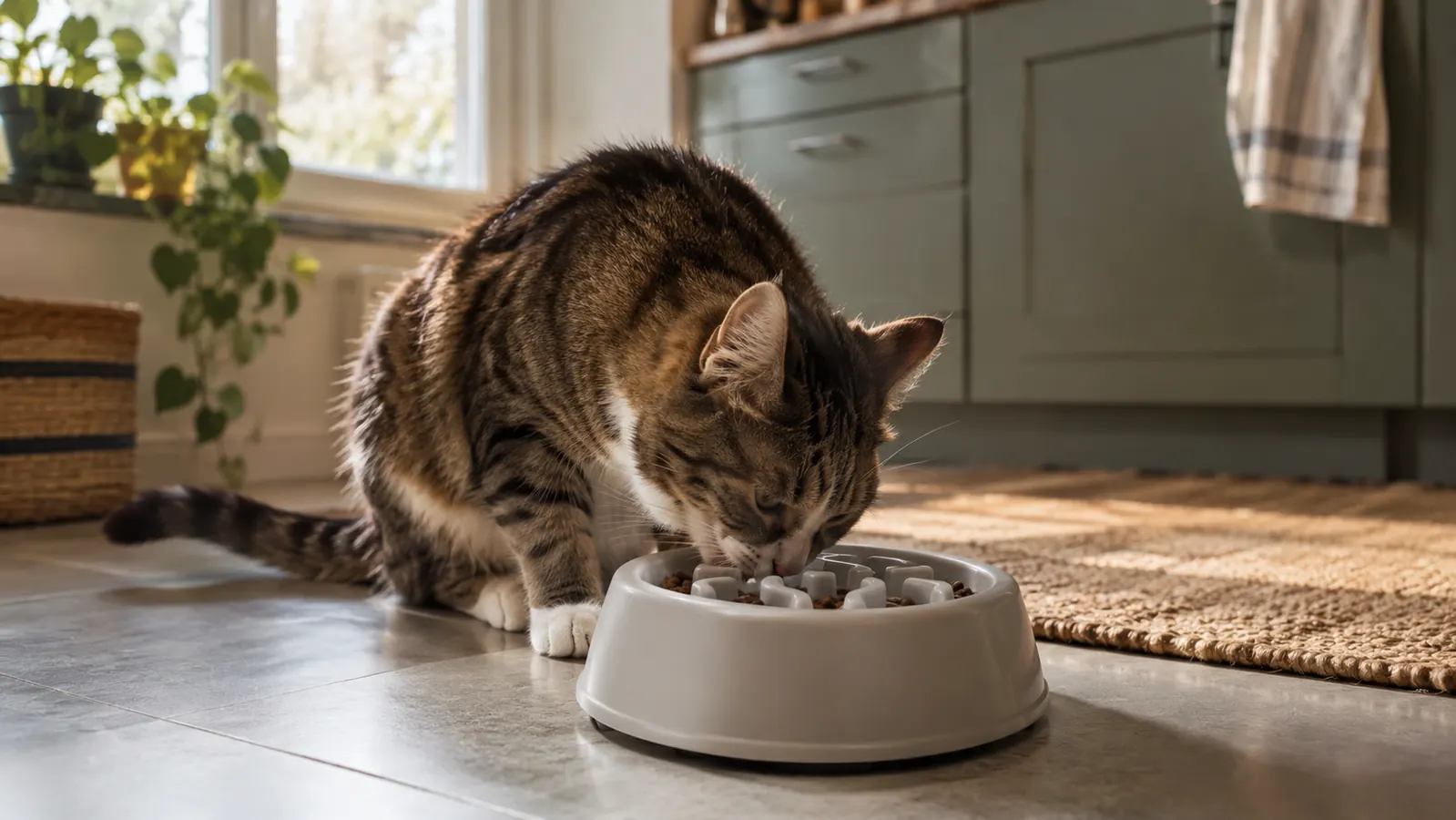
Juniper has always eaten like she is afraid the bowl is going to get up and walk away. For years I figured that was just how she was, a gray tabby with more enthusiasm than table manners. Then she hit eleven pounds at her annual checkup last fall, the vet raised an eyebrow, and I started paying attention to how fast the food was disappearing. I timed her one morning out of idle curiosity. A third of a cup of kibble, gone in under a minute, with pieces scattered on the tile because she was eating so fast she kept missing. That is not eating, that is vacuuming.
So I ordered the Catstages slow feeder bowl, mostly because it was inexpensive and I was tired of watching her inhale breakfast. I will be honest, I did not expect much. I had tried a different slow feeder years ago, a deep one with a single big ridge, and Juniper had refused to use it after the first day. The Catstages bowl was cheap enough that I figured it was worth one more try, and the worst case was another bowl in the back of the cabinet. Months later, it is still sitting in the same spot on the kitchen floor, and Juniper still has to work for every bite. Here is the honest rundown of what that bowl did for us, what it did not do, and who I would hand it to.
The Quick Verdict
A simple, sturdy slow feeder that stretched Juniper's mealtime from about 30 seconds to a solid 4 minutes. It will not fix every cat's scarfing habit, but for the price it is the first thing I would try.
Amazon Check Today's Price →If your cat eats like the bowl is running late, this is the cheap fix to try first
The Catstages slow feeder bowl is one of the least expensive ways to slow down a fast eater. It is not fancy, but it worked for my 11-year-old tabby, and it might work for yours.
Amazon Check Today's Price on Amazon →How I've Used It
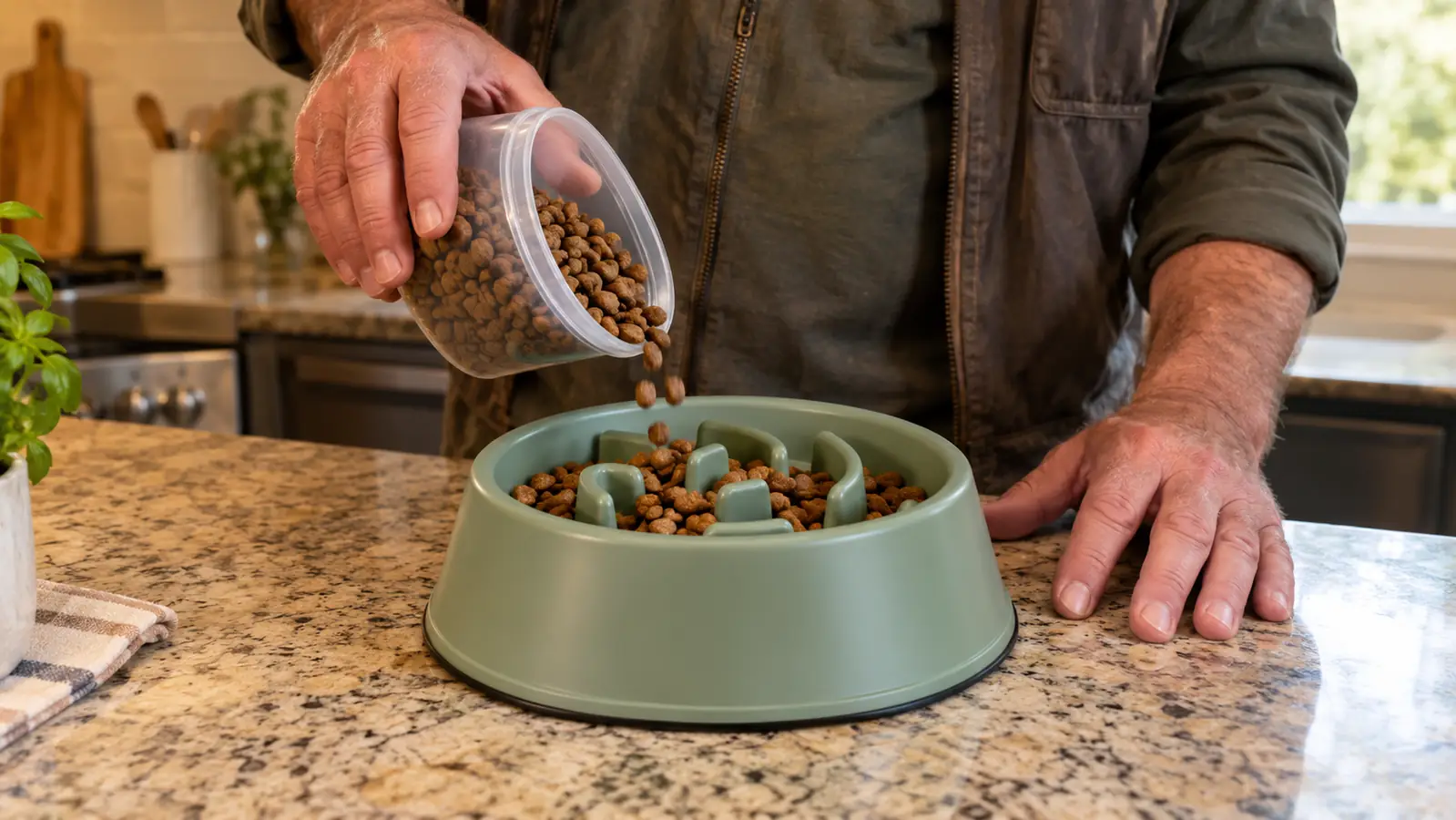
I have been using the Catstages slow feeder bowl twice a day, every day, for about four months now. Juniper gets a third of a cup of kibble in the morning and another third in the evening, which is what the vet recommended when she hit eleven pounds. The bowl holds about three quarters of a cup, so I have never had to worry about overflow, and at 5 inches across it fits in the corner of the kitchen floor without getting in the way. The raised ridges and curved walls break the surface into little valleys, so she has to pick around the maze to get each piece instead of scooping up a mouthful in one go. The whole routine takes about ten minutes a day, and it is the same routine now as it was in the first week, which is exactly what I wanted from a bowl.
The first few days were funny. Day one, Juniper stared at the bowl like I had put a traffic cone in front of her dinner. She pawed at the ridges, batted a piece of kibble onto the tile, and gave me a look that said this was my fault. Day two was more of the same, plus a little yowling. By day five she had stopped pawing and started eating, and by the end of the first week she had figured out the pattern. Now she settles in and works her way around the bowl like it is a puzzle she has solved a hundred times, starting at the left edge and going clockwise, which I only noticed because I watch her eat more than a normal person should. I have also used it for the occasional wet food meal, though I will be honest, the ridges are better suited to kibble. The one time I gave her a half can of pate in it, she licked the tops of the ridges clean and left a ring of smeared food in the corners. It cleaned up fine, but it took a scrub brush and about ten minutes, so now I stick to kibble in this bowl and use a flat dish for the wet food.
I clean it in the dishwasher about every other day, top rack, and it comes out looking the same as the day it arrived. No cracks, no warping, no weird smells, even after four months of hot cycles. The rubber ring on the bottom keeps it from sliding across the floor while Juniper eats, which matters more than I expected. My kitchen floor is smooth tile, and a bowl that skates around is a bowl that ends up flipped over. I know because her old bowl ended up flipped over at least twice a week. This one has not flipped once.
What the Catstages Slow Feeder Bowl Actually Does
The idea behind any slow feeder is simple: make the cat work for the food, and the meal takes longer. The Catstages bowl does this with a series of raised ridges and curved walls that break the surface into smaller sections. The maze is not a gimmick. The kibble sits in the valleys between the ridges, and she has to angle her head and reach over a wall to get each piece. There is no way to scoop up a mouthful in one go. I timed her with my phone one morning out of curiosity, the way you time a recipe, and that was when I realized the bowl was actually doing something. She finished, sat back, and cleaned her face in a way she never did before, because she was actually full instead of just done.
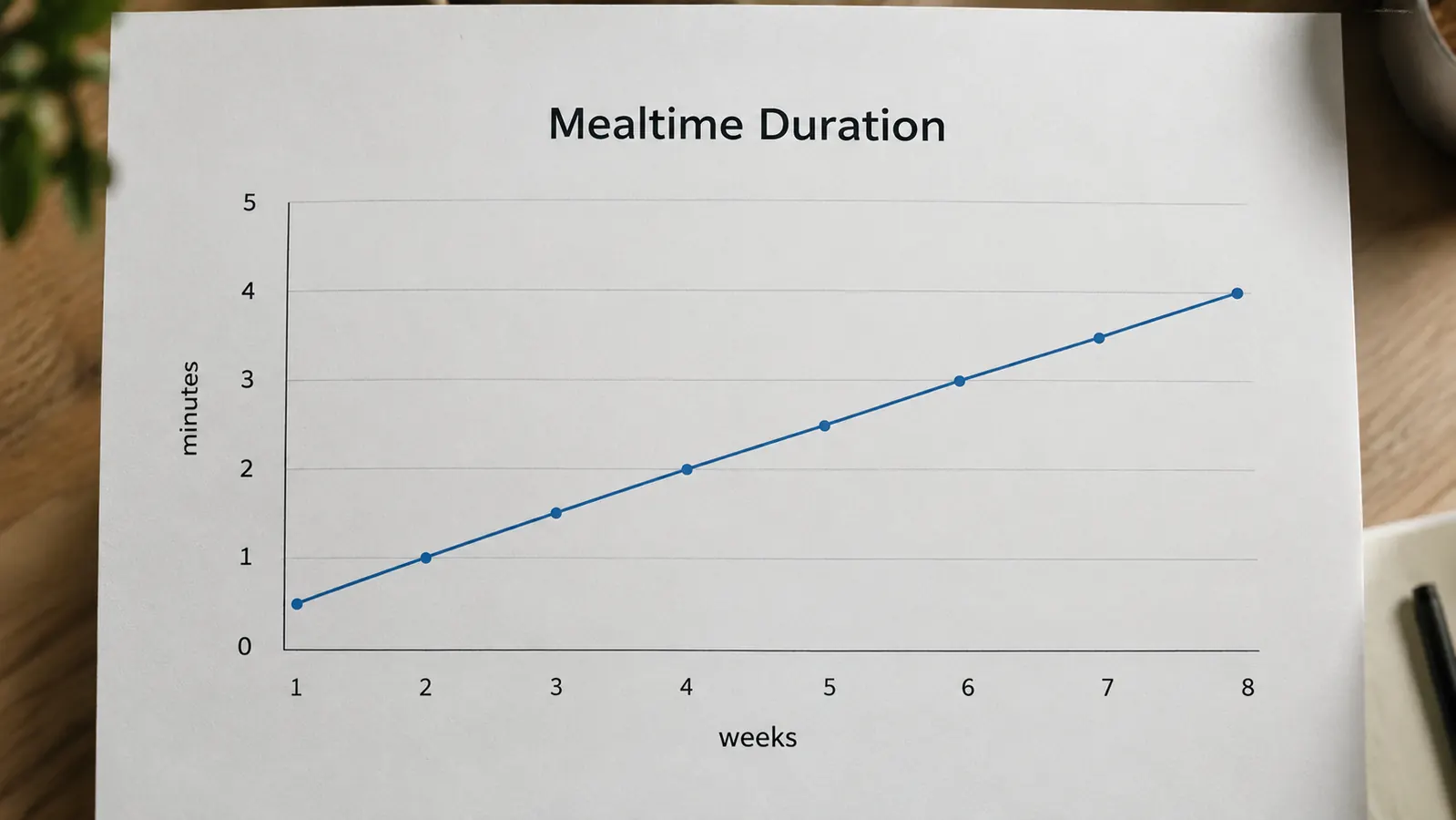
Before the bowl, Juniper finished a third of a cup of kibble in about 30 seconds, and maybe twice a week she would finish and then throw it back up on the floor a few minutes later. The vet said that was classic scarf-and-barf, and suggested smaller meals or a slow feeder. With the Catstages bowl, her meals run about 4 minutes. That is not a dramatic change, but it is a meaningful one. Slower eating gives the stomach time to register food, which is part of why vets recommend slow feeders for cats that scarf and then throw up. I keep a little note on the fridge of when she throws up, because I work at a vet clinic and I know the questions they are going to ask. The bowl has cut that down to maybe once every two or three weeks. Not eliminated, but noticeably reduced.
The bowl is also shallow and wide, which I appreciate because Juniper's whiskers are sensitive. She has never been a fan of deep bowls where her face has to disappear, and she would sometimes sit and stare at her old dish instead of eating, probably because the sides brushed her whiskers as she reached in. With this one, the sides are low enough that she can see her food the whole time, and she seems more relaxed at mealtime because of it. She eats standing at the edge instead of crouching over it, which looks like a small thing but has made the whole routine calmer.
How It Held Up Over Months of Daily Use
I will be honest, I did not expect much from a bowl in this price range. Plastic bowls have a way of getting scratched, stained, or smelly after a few months, and I have thrown away plenty of them over the years. The Catstages bowl has held up better than I expected. The surface is still smooth, the ridges are still intact, and there are no deep scratches even though Juniper is not gentle with it. She drags her tongue across the plastic, bats at stubborn pieces, and once, in a fit of frustration over a stuck piece of kibble, she hooked a claw into a ridge and pulled. I checked for a gouge afterward and there was not one. I also dropped it on the tile one morning when my hands were wet from rinsing it, and it bounced without a mark.
The rubber base is the one part I keep an eye on. It is still doing its job, gripping the tile so the bowl does not move while she eats, but I can tell it is the first thing that would wear out if we used this bowl for a couple of years. It has not peeled or cracked yet, though I did notice one corner lifting slightly in the third month. I pressed it back down, it has stayed put since, and I have stopped worrying about it. If it ever gives up, the fix is a dot of glue, and if that does not hold, the bowl is cheap enough that I would just replace it rather than fuss with it.
One thing that surprised me is how easy it is to clean. I was expecting to scrub kibble dust out of every little crevice, the way you have to with some slow feeders that have tight grooves. The Catstages ridges are wide enough that a quick rinse under the tap handles most of it, and the dishwasher does the rest. I have run it through easily a hundred times by now, top rack, and it still looks presentable. No cloudy film, no lingering smell of old fish, which is more than I can say for the last plastic dish I owned.
Juniper's mealtime went from about 30 seconds of frantic gulping to a solid 4 minutes of actual eating, and the bowl still looks the same after four months of twice-daily use.
Where the Catstages Slow Feeder Bowl Falls Short
No review is honest without the cons, and this bowl has a few. The first is that it is not a cure-all. If your cat is a determined gulper, this bowl will slow them down, but it will not stop them entirely. Juniper still finishes her breakfast faster than I would like, maybe two and a half minutes on a slow morning. She just does it with more effort and fewer side effects. If you are hoping for a bowl that turns a frantic eater into a dainty one, this is not that bowl. But I have decided that is not really the point. The point is that she is eating slower and keeping it down, and I will take that trade.
The second con is that it is really only ideal for kibble. Wet food gets stuck in the ridges and takes extra effort to clean. I learned this on a Tuesday morning when I was out of kibble and gave her a half can of pate. She ate it, but she licked the tops of the ridges clean and left the smeared parts in the corners, and I spent a solid ten minutes with a scrub brush getting the bowl presentable again. I have used it for wet food a handful of times since, and every time I end up scrubbing more than I would with a flat bowl. If your cat eats mostly wet food, this is probably not the bowl for you.
The third thing is more of a note than a con. Some cats simply will not use it. Juniper adapted within a week, but I have a friend whose cat, a tuxedo named Bitsy, refused to touch a slow feeder for three days and only gave in when the food was set on top of the ridges instead of in the valleys. Another coworker at the clinic tried one with her cat and gave up after a week because the cat just sat and yowled next to the bowl. If your cat is extremely picky or easily frustrated, you might end up with a bowl that sits in the cabinet. That is a risk with any slow feeder, not something specific to Catstages.
What I Liked
- Slowed Juniper's mealtime from about 30 seconds to about 4 minutes
- Sturdy and easy to clean, survived months of daily dishwasher use
- Shallow and wide, good for cats with sensitive whiskers
- Rubber base keeps the bowl from sliding on smooth floors
- Inexpensive enough to try without much risk
Where It Falls Short
- Not ideal for wet food, which gets stuck in the ridges
- Won't stop a truly determined gulper, just slows them down
- Some picky cats may refuse to use it entirely
- Rubber base may wear out before the rest of the bowl
Who This Is For
This bowl is for anyone with a cat that eats too fast and needs a gentle nudge toward slower meals. If your cat finishes a bowl of kibble in under a minute, throws up after eating, or has started to pack on weight because they eat like they are in a race, the Catstages slow feeder is a cheap, low-stakes thing to try. It is also a good fit for cats with sensitive whiskers who prefer a shallow bowl, and for owners who want something that is easy to clean and does not take up much counter space. If you are standing in the aisle wondering whether to spend money on a fancy feeder, I would start here. It is the least expensive option I found, and it is the one that actually stayed in the rotation.
Who Should Skip It
Skip this bowl if your cat eats mostly wet food, because the ridges make cleanup more of a chore than it needs to be. Skip it if your cat is the type to get frustrated and refuse food when things are not exactly right, because some cats will simply not eat out of a slow feeder. And if your cat has dental issues or a medical reason for eating a certain way, talk to your vet before switching bowls. I work at a vet clinic, and I have seen too many owners try a bowl when the real problem needed a professional. A slow feeder fixes speed, not pain, and it is worth ruling out the other stuff first.
Four months in, this is still the bowl on my kitchen floor
The Catstages slow feeder bowl did not turn Juniper into a dainty eater, but it slowed her down, cut down on the post-meal throw-ups, and survived months of daily use. If your cat eats too fast, it is worth a try.
Amazon Check Today's Price on Amazon →