
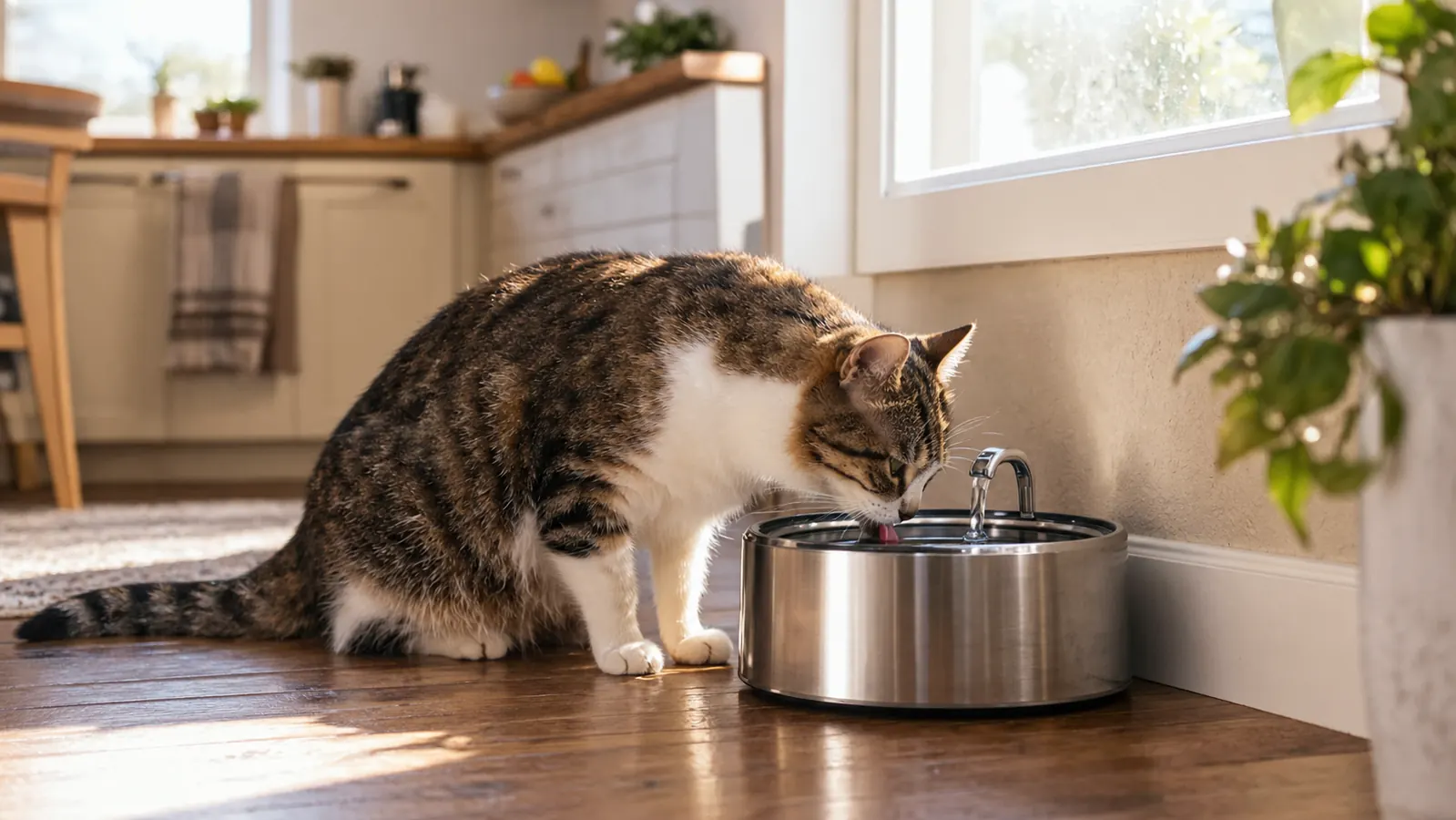
Cats do not drink enough water. I have watched this play out for twelve years from the front desk of a small animal vet clinic, and I have watched it at home for eleven years with my own cat, Juniper. She is a gray tabby, about eleven pounds, and she would rather lick the bathroom faucet than drink from the bowl I set out for her. My vet pointed out that cats who barely drink are the ones who come back with urinary trouble and early kidney issues. That got my attention, because Juniper is not young anymore, and I wanted to fix the habit while it was still a habit and not a health problem. So I did what I usually do when Juniper has a stubborn streak. I watched her, asked my vet a few questions, and tried the simplest solution first.
The fix that finally worked was moving water. Cats are wired to trust running water more than still water, because in nature moving water is less likely to be contaminated than a quiet pool. The GIOTOHUN stainless steel cat water fountain turned that instinct to my advantage. It is a simple idea, a recirculating fountain with a small pump, but it changed Juniper's habits within the first week. Here is the exact five-step routine I used, in case you are trying to coax a cat who barely drinks into actually hydrating.
A Fountain That Got a Picky Cat Drinking
The GIOTOHUN stainless steel fountain keeps fresh moving water in front of Juniper all day, and it is easy to clean, which matters when your cat turns up her nose at stale water.
Amazon Check Today's Price on Amazon →Before I walk you through the steps, one honest note. This is not a magic fix that works overnight. It is a small routine, about five minutes of daily effort, and the payoff is a cat who drinks without being coaxed. Here is how I did it.
Step 1: Put the Fountain Where Juniper Already Drinks
Cats have strong opinions about where water belongs. In the wild, they avoid drinking near their food or their bathroom area, because still water in those spots is likely to be contaminated. That instinct is still running in your house cat. If the fountain sits right next to the food bowls, a cat who barely drinks may walk past it on purpose. My vet calls this the food bowl problem, and it explains a lot of the cats I see who seem to ignore water completely. Move the water away from the food and some cats start drinking with no other change.
I put the GIOTOHUN in the corner of the kitchen near the back door, about six feet from Juniper's food bowls and nowhere near her litter box. That corner is where she already liked to sit in the afternoon sun, so the fountain showed up in a spot she considered hers. She could see it, hear it, and investigate it without feeling cornered. The gentle sound of moving water became part of the background of her favorite room. Placement did half the work before she ever took a drink.
A few practical notes. The fountain has a 74 ounce tank, which is about 2.2 liters, and it is heavy enough when full that Juniper cannot tip it over. That matters, because a spilled fountain gets shoved in a closet and the cat goes back to ignoring water. Keep the cord tucked against the wall so you are not tripping over it, and make sure the surface underneath is level. A wobbly fountain makes a nervous cat, and a nervous cat will not drink.
Step 2: Keep the Old Bowl Out for the First Week
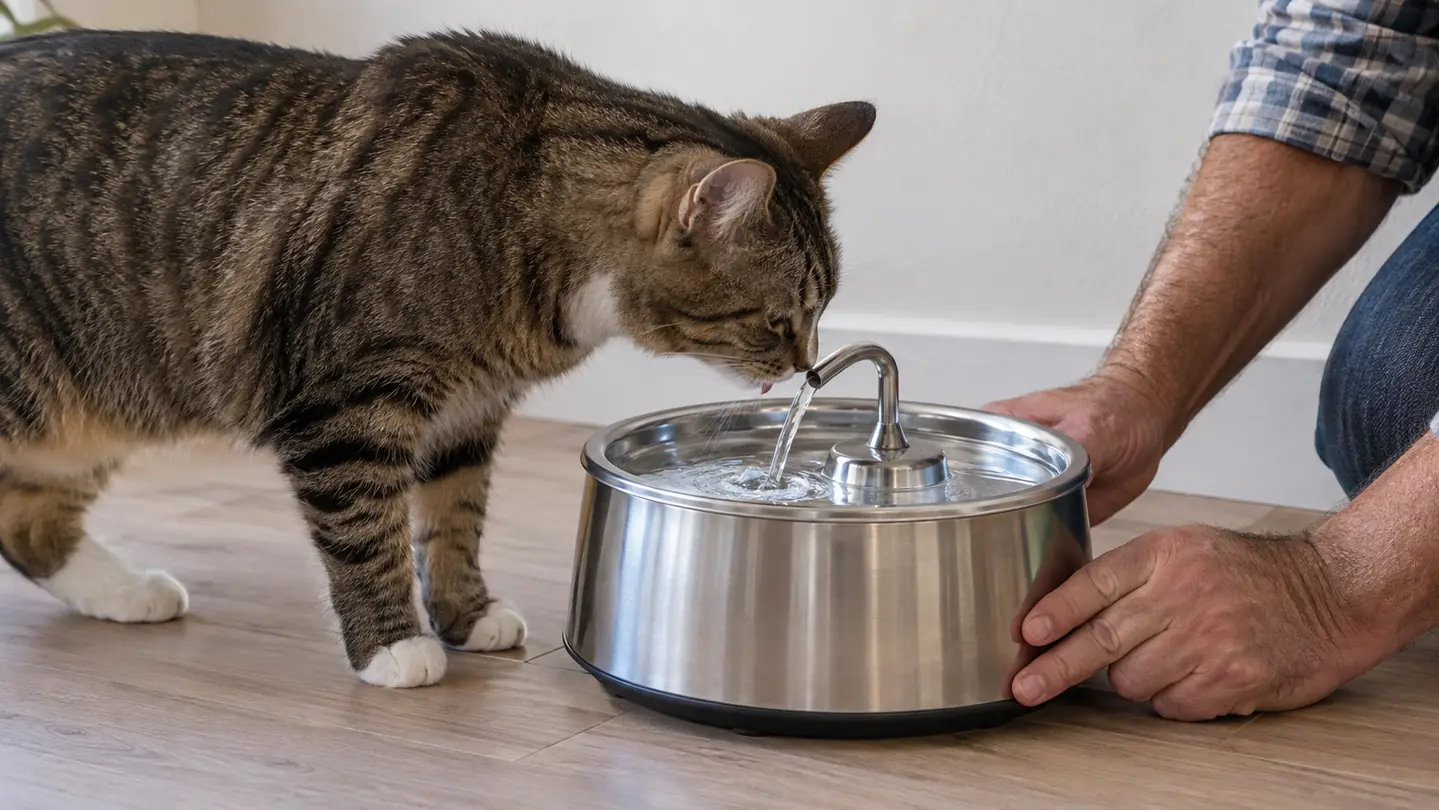
Cats do not like surprises, especially around food and water. Juniper treated the new fountain like a suspicious package for the first two days. She sniffed it, circled it, and then drank from her old bowl instead. That is normal. The mistake most people make is removing the old bowl the same day the fountain arrives, which forces the issue and makes the cat more stubborn. I have seen owners give up after one day and return the fountain, when the cat was one more afternoon away from trying it. Give the cat time to decide it is safe.
I left the old bowl out and ran the fountain beside it. On day three, Juniper finally put her head down to the stream of water. On day five, I caught her drinking from the fountain three times in one afternoon. By the end of the week, the old bowl was going dry because she had stopped using it. I cleaned it, dried it, and put it away in the cupboard, where it has stayed ever since.
If your cat takes longer, do not rush it. Some cats need two weeks to accept a new water source, especially older cats with fixed routines. Keep the bowl out as long as it takes. The fountain is not competing with the bowl; it is offering an option. Most cats will choose the moving water on their own schedule, and the choice is what makes it stick. Forced change just makes a stubborn cat more stubborn.
Step 3: Clean It on a Schedule So the Water Stays Fresh
Here is the part nobody mentions in the product listing. A fountain only works if you keep it clean. Cats have a much sharper sense of smell than we do, and water that tastes stale or smells like yesterday's pump will be rejected fast. A dirty fountain is worse than no fountain, because it can grow bacteria and slime that make a cat sick. The cats I see with tummy trouble at the clinic are sometimes drinking from fountains that have not been cleaned in a month. Do not let that be your cat.
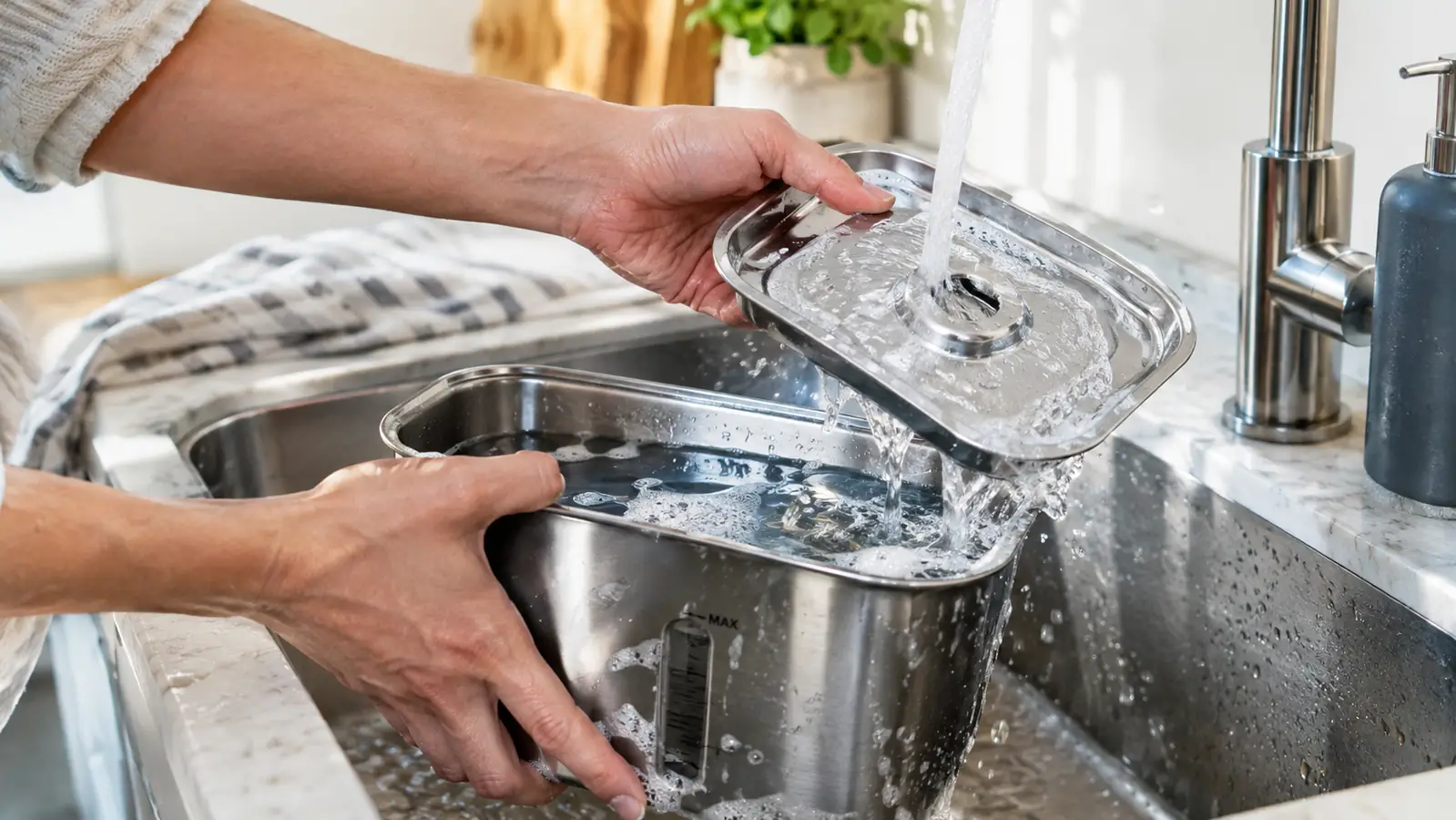
The GIOTOHUN is stainless steel, which is the main reason I chose it over the plastic fountains. Stainless does not hold onto odors the way plastic does, it does not get those fine scratches that trap bacteria, and the main parts go in the dishwasher. I take the fountain apart every three days, wash the tank and the top tray with warm soapy water, and rinse everything well. The pump gets a deeper cleaning once a week. The whole routine takes about ten minutes, and it keeps the water tasting like water.
Set a reminder on your phone or tie it to something you already do. I clean the fountain on the same evenings I take out the recycling, so it never slips my mind. If the idea of a weekly teardown sounds like too much, this may not be the right solution for you. That is a fair thing to know before you buy, because the fanciest fountain in the world is just a dusty decoration if you do not maintain it.
Step 4: Refresh the Water and Check the Pump Regularly
Moving water is only appealing if it is actually moving and actually fresh. I top off the GIOTOHUN every morning when I fill my own water glass, and I do a full water change every three days when I clean it. That habit takes about thirty seconds a day, and it means Juniper never drinks water that has been sitting around collecting dust or picking up flavors from the air. Fresh water is the whole point of a fountain.
The pump is the heart of the fountain, and it needs a little attention. GIOTOHUN includes a filter and a pump, and both need regular rinsing. I check the pump intake for fur and gunk when I do the weekly deep clean, and I replace the filter on the schedule the instructions recommend. A clogged pump runs louder, and a loud pump can scare a nervous cat away from the water. A quiet pump is not a luxury; it is part of the job.
One thing I appreciate about this fountain is how quiet it is. Juniper is easily startled, and the first fountain I tried years ago hummed loud enough that she avoided the room. This one makes a soft trickle sound, more like a small stream than an appliance, and she will sit next to it and watch the water move even when she is not drinking. That curiosity is exactly what gets a reluctant cat to take that first sip.
Step 5: Watch How Much She Is Actually Drinking
You cannot make a cat drink, but you can notice whether the situation is improving. The most reliable sign is the litter box. Juniper's urine output went up within the first two weeks, and the clumps in her box were bigger and softer. That is the sign my vet told me to watch for, because it means her body is actually holding onto more water instead of running on the edge of dehydration. It is the difference between a cat who drinks and a cat who is merely present near water.
I also check the obvious things without turning into a helicopter cat parent. Her gums look pink and moist instead of tacky. When I gently pinch the skin between her shoulders, it snaps back quickly instead of staying tented. And she has stopped racing to the bathroom faucet every time someone turns it on. Those are all small signs that she is getting what she needs, and they are easy to check once you know what to look for.
I am not a veterinarian. I answer the phones at a vet clinic, and the one thing I have learned is that sudden changes matter. If your cat suddenly drinks a lot more or a lot less, if she is straining in the litter box, or if she seems lethargic, call your vet. A fountain is not a treatment. It is a way to support a healthy cat's normal habits, and it works best when you keep an eye on the bigger picture.
What Else Helps
The fountain did the heavy lifting, but I did not stop there. I switched Juniper's food to include more moisture, because wet food is the easiest way to get water into a cat who still refuses to drink enough. She gets a morning serving of wet food and free access to her dry kibble, and the combination has kept her hydrated without a fight. I also put a plain water bowl in the hallway near the bedrooms, because a single water source in a small house is not enough for a curious cat who naps in three different spots.
A few smaller tricks helped too. A couple of ice cubes in the fountain on hot summer days made Juniper curious enough to investigate the moving water again. I rinse the fountain with fresh water rather than reusing yesterday's, and I keep the water level topped off so the pump never runs dry. The goal is to make drinking the easiest, most interesting option in the house, so the cat chooses it on her own. When the choice is easy, the cat makes it.
One more thing. If you try a fountain and your cat still will not drink, do not stack more gadgets on top. Go back to the basics. Offer fresh water in a wide bowl, add wet food, and talk to your vet about whether your cat needs a checkup. Sometimes a cat who barely drinks is telling you something bigger, and a fountain will not answer that question for you.
Two weeks in, Juniper was visiting the fountain several times a day, and the clumps in her litter box were bigger and softer than they had been in years. That was the proof I needed.
The Bottom Line
If you have a cat who barely drinks, I would start with the same five steps I used. Put the fountain somewhere the cat already likes, keep the old bowl out while she decides, clean it on a schedule, refresh the water daily, and watch the litter box for proof that it is working. The GIOTOHUN stainless steel fountain handled all of that without fuss, and it has been running in my kitchen for months now without a single complaint from the pickiest cat I know.
The Fountain That Turned Things Around for Juniper
If your cat barely drinks, a stainless steel fountain is the lowest-effort change I know. GIOTOHUN makes one that is quiet, easy to clean, and sized right for a single-cat household like mine.
Amazon Check Today's Price on Amazon →