
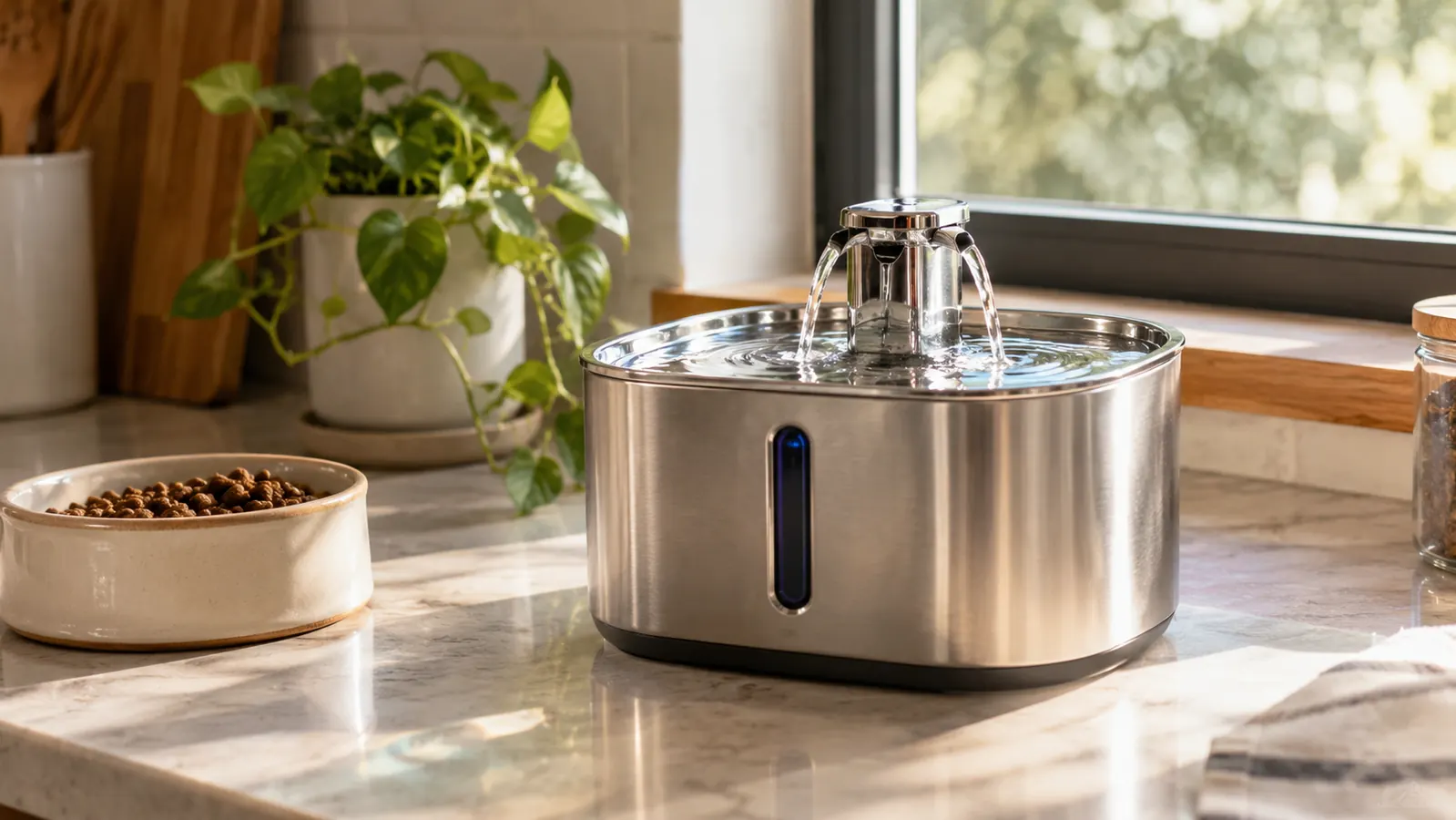
I will be honest with you: I bought the GIOTOHUN stainless steel cat water fountain mostly because I was tired of scrubbing green film out of Juniper's plastic bowl. Twelve years at the front desk of a small animal clinic in Allentown had already taught me that cats do not drink enough, that plastic holds onto smells, and that a dehydrated cat ends up in a lot of trouble. But knowing all of that did not prepare me for how opinionated my 11-year-old gray tabby would be about a new water source. She sniffed it, circled it, and gave me a look that said I had wasted my money. Then, at 2 AM, I heard the little motor humming and the soft splash of her drinking. That is the whole review in miniature: the GIOTOHUN won her over, but it took longer and made more noise than the product photos suggest.
The Quick Verdict
A sturdy, easy-to-clean stainless steel fountain that most cats will accept eventually, as long as you do not mind a little motor hum and a weekly scrub of the pump.
Amazon Check Today's Price →Tired of scrubbing slime out of a plastic bowl?
The GIOTOHUN stainless steel fountain gives your cat moving, filtered water and gives you a surface that does not hold onto smells. See today's price on Amazon and read the recent owner photos before you decide.
Amazon Check Today's Price on Amazon →How I've Used It
Juniper is an 11-year-old gray tabby, about 11 pounds, and she has always been a light drinker. At the clinic I have seen what that leads to: constipated seniors, cats with urinary issues, owners who do not realize their cat has been running on fumes for years. So when I brought the GIOTOHUN home, I did not just set it on the floor and hope. I put it on a rubber mat in the corner of the kitchen, away from her food bowl, because cats in the wild do not drink next to their kill. I filled it with filtered water from the fridge, let it run for an hour so the smell of the box would fade, and then I waited.
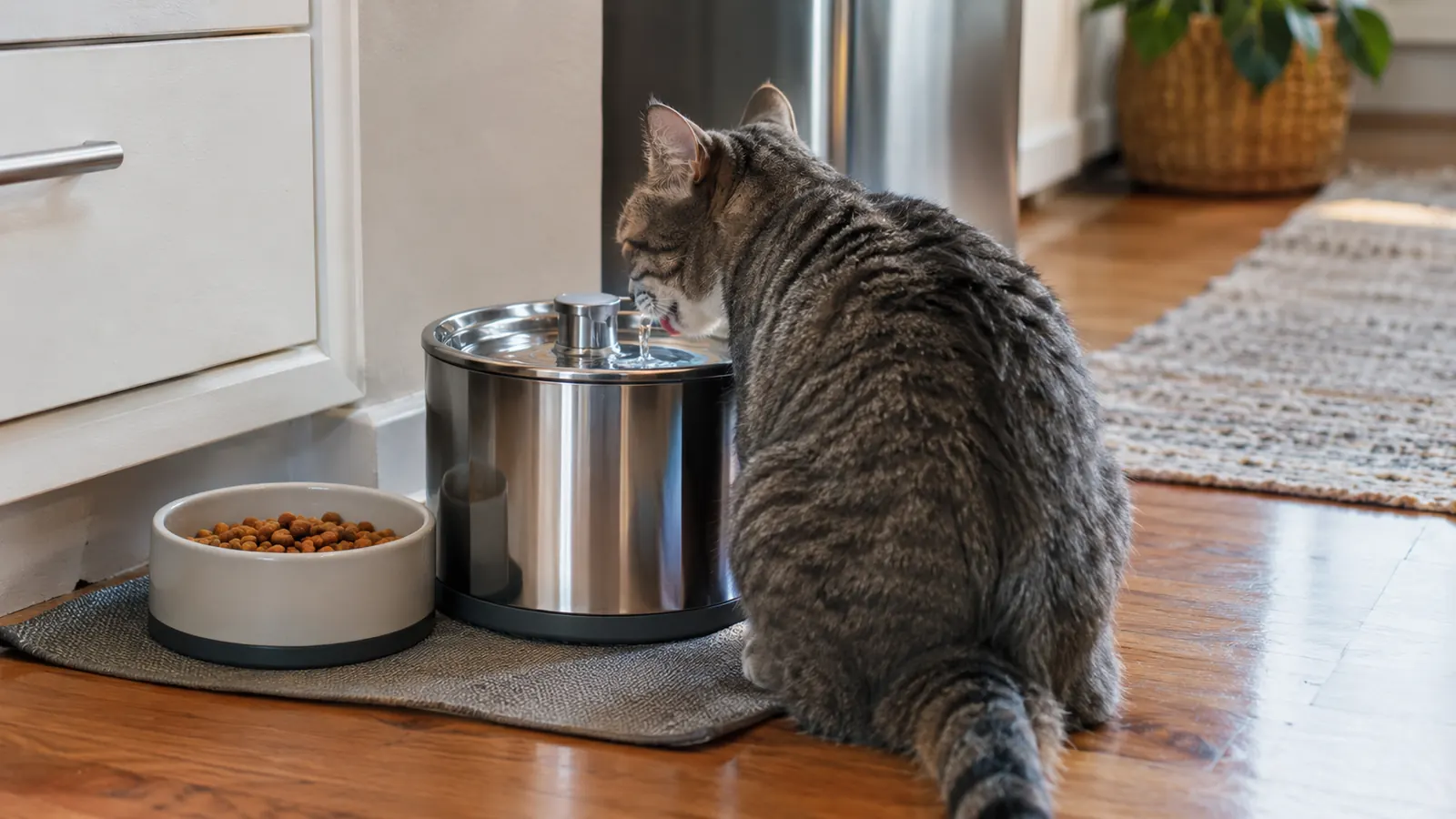
The first two days, Juniper acted like the fountain was a small appliance that had invaded her territory. She watched it from the hallway. She batted at the stream once, got her paw wet, and shook it with disgust. I almost returned it. Then on the third night, I heard the motor and the splash, and in the morning the water level had dropped noticeably. By the end of the first week she was drinking from it several times a day, and by the end of the month I was refilling the 74-ounce tank every three days instead of every five. That is the honest timeline: not instant acceptance, but steady, real change.
What finally won her over was placement. I had first set the fountain right next to her food bowl, because that is where water has always gone in our kitchen. On day three I moved it to the far end of the kitchen, near the back door, about six feet from her food. Many cats prefer their water away from where they eat, and I had heard the same thing from our clinic's technicians for years. Within an hour she was sitting in front of it, watching the stream. By that evening she was drinking from the top plate, tilting her head to catch the flow. I felt a little foolish for not trying that first, but it is the tip I now pass on to every client who asks at the front desk.
What Nobody Tells You Before You Buy
The product photos make a fountain look like a silent little waterfall that your cat will adore from the first sip. The reality is more complicated, and I think buyers deserve the full picture before they spend money. So here is what I learned over six weeks of daily use, in the order it surprised me.
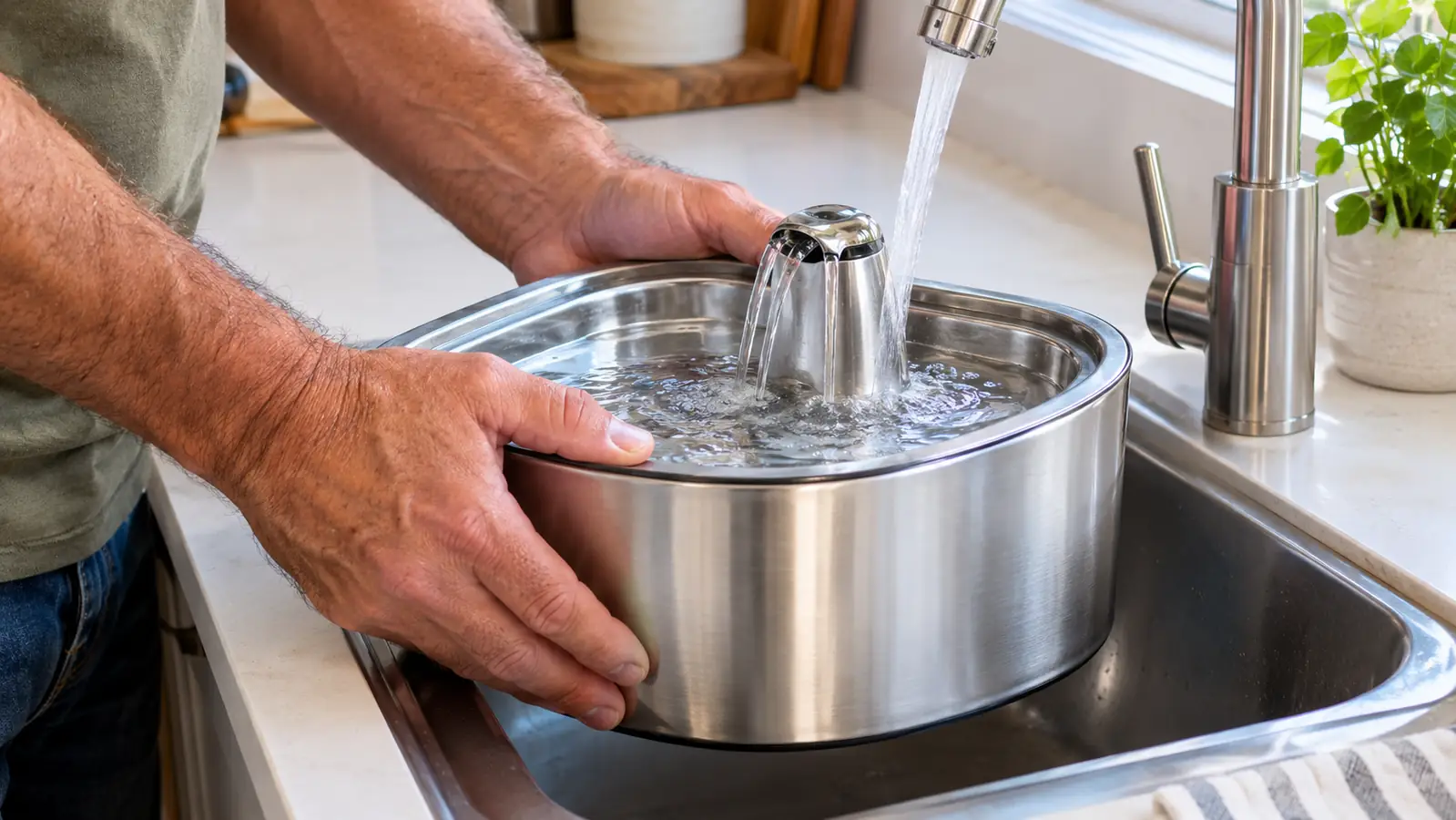
First, the motor is not silent. It is not loud, either, but in a quiet house at 2 AM you will hear it. It is a low hum, like a phone charger or a small aquarium pump, and it is constant. Juniper got used to it quickly, and so did I, but if you are a light sleeper and the fountain is near your bedroom, you will notice it. Second, the pump needs real cleaning, not a rinse. I learned this the hard way when the flow slowed to a trickle in week three. The little foam filter had trapped a lot of what I assume was dust and cat hair, and the pump chamber had a thin film that no amount of shaking would remove. I had to take the whole thing apart, soak the pump in a little vinegar water, and scrub the impeller with a cotton swab. It took about fifteen minutes, and after that I put a weekly reminder on my phone.
Third, the stainless steel is the whole point, and it delivers. No plastic smell, no cloudy film, no scratches that hide bacteria. When I wash the tank in the sink with hot soapy water, it comes out looking like the day I bought it. That alone is worth a lot to me, because I have thrown away more plastic bowls than I can count. Fourth, the water level drops faster than you expect, not because of evaporation but because cats drink more when the water is moving. That is the goal, of course, but it means you will be refilling more often than you did with a bowl. I do not mind. I would rather refill a fountain than coax a constipated cat through a rough weekend.
There is also the matter of the filter. The fountain uses a replaceable filter that sits in the tank, and the instructions call for changing it every few weeks depending on how many pets you have and how hard your water is. With one cat and our Allentown tap water, I have been changing mine about once a month, and I can see when it is due: a light film on the steel and a faint mineral line at the water level. Filters are an ongoing cost that is easy to forget when you are looking at the box, so factor them in. I keep a spare pack in the drawer so I am never tempted to stretch an old one past its time.
The stainless steel is the whole point, and it delivers. No plastic smell, no cloudy film, no scratches that hide bacteria.
The Stainless Steel Difference
I have cleaned a lot of cat bowls in my life, and I can tell you exactly why stainless steel matters. Plastic scratches. Every little scratch becomes a home for bacteria and a trap for the oils from your cat's skin and food. You can wash a plastic bowl until it squeaks, and it will still smell faintly of old food. Stainless steel does not do that. The GIOTOHUN tank is one solid piece of brushed metal, no seams, no corners where gunk hides. I can see every bit of it, and so can you, and that visibility is the real feature. When the water is clean, the bowl looks clean. When it needs a wipe, I can see that too.
The other thing I appreciate is the weight. The tank is heavy enough that Juniper cannot tip it, and she has tried. She is a cat who likes to put her front paws on the edge of her water bowl, and the GIOTOHUN does not budge. That stability matters more than I expected, especially on a kitchen floor where a tipped bowl means a puddle and a soggy mat. The rubber mat I put underneath has stayed dry, which is more than I can say for any bowl she has ever owned.
Cleaning is where stainless steel really earns its keep. Once a week I unplug the GIOTOHUN fountain, take it apart, and wash the tank, top plate, and pump housing in warm soapy water. The steel parts can go in the dishwasher on the top rack, which I do about every other week. The pump itself needs a gentle hand: I pop the cover off and use an old toothbrush to clear hair and the slippery film that builds up around the impeller. The whole job takes me about fifteen minutes. If you skip it, the pump slows and the hum gets louder, which is the fountain telling you it needs attention. A plastic fountain I tried years ago never came fully clean no matter how much I scrubbed it.
How It Performed Over Six Weeks
Week one was the adjustment period I already described. Week two, Juniper started drinking regularly, and I noticed she was spending more time at the fountain than she ever had at her bowl. Week three, the flow slowed and I learned the pump cleaning lesson. Week four, after a proper cleaning, the flow was back to normal and I started a routine: a quick rinse every other day, a full pump soak every Sunday. Week five and six were boring in the best way. The fountain ran constantly, the water stayed clear, and Juniper drank without any encouragement from me.
I also watched for the things that worry me at the clinic. No chin acne, which I half expected from a new fountain. No change in her litter box habits, which is the first sign of a urinary problem. No reluctance to approach the fountain after cleaning, which can happen with cats who are sensitive to smells. The GIOTOHUN passed all of those tests, and for a cat who once got a little chunky and has always been a picky drinker, that is a meaningful result.
By week six I had numbers, not just impressions. I started marking the water level with a strip of tape each morning after filling. Before the fountain, Juniper barely moved the level of her bowl in a day. With the fountain, I was topping up a noticeable amount every two days, even allowing for evaporation from the moving water. Her litter box told the same story: larger, more frequent clumps, which is what you want to see in an older cat. I am not going to tell you a fountain is medical treatment, because it is not, and anyone with a cat who has kidney concerns should be following their vet's plan. But for getting a stubborn senior to drink more, this did what I hoped.
What I Liked
- Stainless steel tank and top plate stay cleaner than plastic and hold no smell
- Moving water got my picky senior cat drinking noticeably more within two weeks
- Heavy enough that a curious paw cannot tip it over
- Steel parts are top rack dishwasher safe
- Large 74 oz tank only needs topping up every couple of days for one cat
- Looks tidy on a kitchen floor, more like an appliance than a toy
Where It Falls Short
- The pump has a low hum you will hear in a quiet room at night
- Filters need replacing about monthly, an ongoing cost
- Weekly pump cleaning is not optional, or the flow slows down
- Some cats need a few days and the right placement before they trust it
Who This Is For
This fountain is for the owner who is tired of plastic. It is for the person who has scrubbed a bowl, smelled it, and wondered what their cat is actually drinking. It is for the household where the cat drinks too little and the vet has mentioned it more than once. It is for the owner who wants a water source that looks tidy on the kitchen floor and does not need to be replaced every six months. If that sounds like you, the GIOTOHUN is a solid choice, and the stainless steel will outlast any plastic fountain you have owned.
It is also for the household that wants things tidy. The fountain has a compact round footprint, and the brushed steel looks like a small kitchen appliance rather than a plastic toy. The cord is long enough to reach an outlet behind the trash can without stretching across the floor, which matters if you have a dog or grandchildren running through. I put a washable silicone mat underneath, because a cat who drinks enthusiastically will splash, and the mat catches the drips so the floor stays dry. If you value a clean, uncluttered kitchen, it is one of the few pet products I do not mind seeing every day.
Who Should Skip It
Skip it if you cannot stand any motor noise, because there is a hum and it is constant. Skip it if you are not willing to clean the pump weekly, because a neglected pump will slow down and the water will not move the way cats like it. Skip it if your cat is genuinely terrified of new things and you are not prepared for a slow introduction that might take a week. And skip it if you were hoping for a set-and-forget appliance, because this is not that. It is a better water bowl, not a cure. It still needs your attention, and that is exactly what makes it work.
Skip it, too, if you know you will not keep up with cleaning. A neglected fountain is worse than a fresh bowl of water, because standing slime in a pump is not something you want your cat drinking. And if your cat already drinks well from a bowl, holds a healthy weight, and has clean bloodwork, you may not need one at all. A wide ceramic or steel bowl, washed and refilled daily, is perfectly good water for many cats. The fountain is a tool for a specific problem, a cat who does not drink enough, and it is very good at that problem. It is not a must have for every cat in every home.
Ready to trade the plastic bowl for good?
The GIOTOHUN stainless steel fountain is the upgrade I kept, and Juniper drinks more because of it. Check today's price on Amazon and see if it fits your kitchen and your cat.
Amazon Check Today's Price on Amazon →