
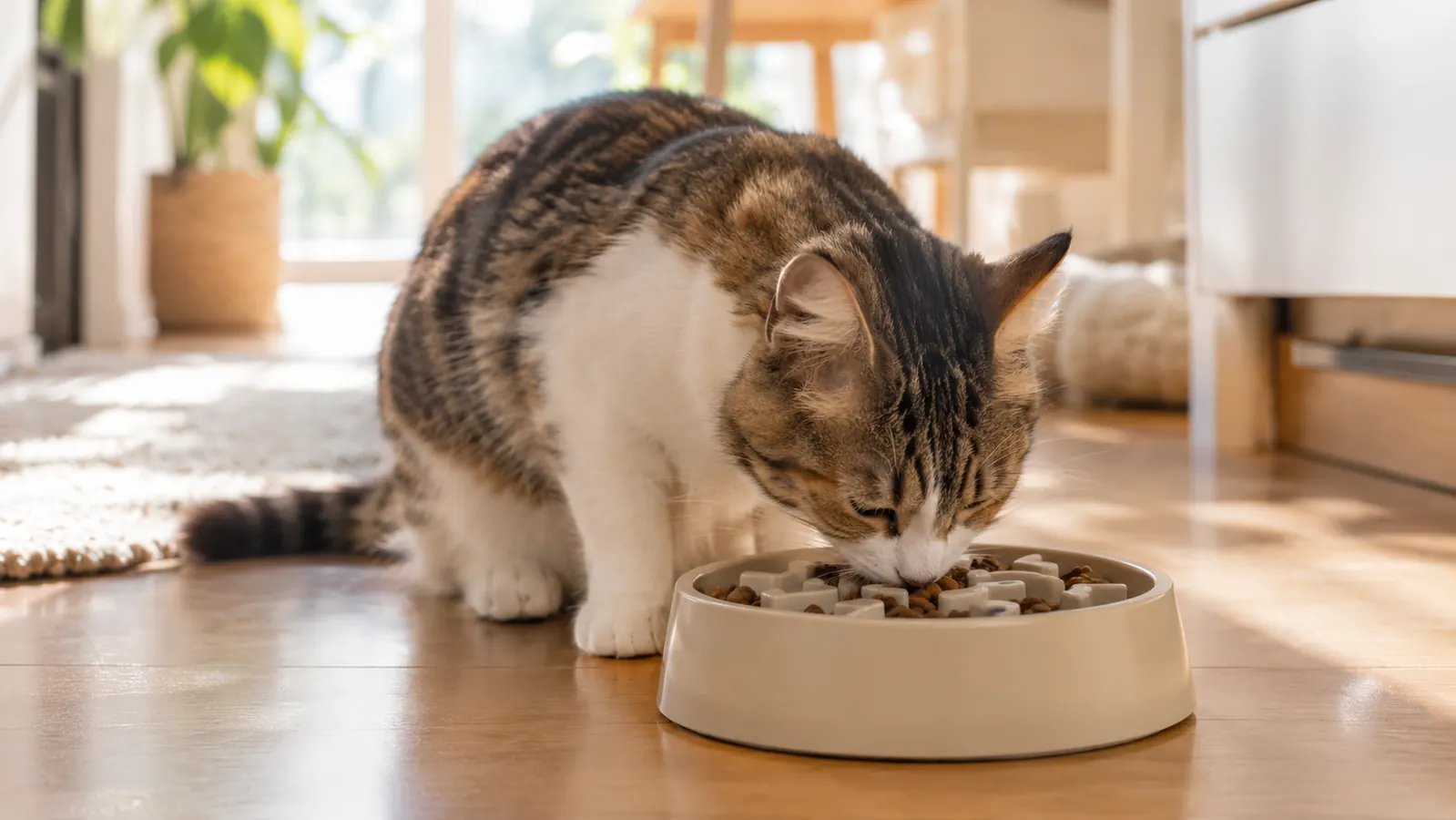
My cat Juniper eats like dinner is a timed event and she's already behind. I don't mean she has enthusiastic table manners. I mean she can clear a bowl of kibble in about ninety seconds flat, then sit over the empty dish and cry like I forgot to feed her at all. She's an eleven-year-old gray tabby, about eleven pounds, and she's not starving. She's just convinced that if she doesn't win the race, the food will disappear. For a long time I tried the usual fixes: a wider bowl, a raised stand, smaller meals spread across the day. None of them slowed her down. What finally worked was the Catstages Kitty Slow Feeder Bowl, and the change in our kitchen showed up within about a week.
Before I walk you through the steps, one honest note about who's talking. I'm Odette Thistlewood, and I've worked the front desk at a small-animal vet clinic in Allentown, Pennsylvania, for twelve years. I'm not a veterinarian and I'm not a vet tech. I'm the person who schedules the appointments, answers the phone, and hears every worried question about cats who eat too fast, throw up after meals, or beg the second the bowl is empty. I've also lived with a gulper myself, so I know the difference between advice that sounds good and advice that holds up on your own kitchen floor. This guide is the second kind.
The problem is more common than you'd think. In twelve years at the front desk, I've lost count of owners describing the same scene: the cat who inhales her food, the dramatic throw-up on the rug, the begging that starts five minutes later. Most people assume it's just how their cat eats. Sometimes it is. But often it's a habit that can be changed with the right bowl and a little patience, and the change makes mealtimes calmer for everyone at the house, including the cat.
Stop the scarf-and-barf cycle with a bowl that slows her down
The Catstages Kitty Slow Feeder Bowl uses raised ridges inside a shallow five-inch bowl to break a fast eater's rhythm. Juniper went from inhaling dinner to taking her time, and the after-meal vomiting stopped within a week.
Amazon Check Today's Price on Amazon →Five Steps That Fixed Juniper's Fast Eating
None of this required a big budget or a complicated routine. It took one new bowl, about a week of patience, and a few small changes around mealtime. Here's the order I'd use if I were starting over with a fast-eating cat tomorrow.
Step 1: Watch how she actually eats for a few days
Before you buy anything, spend a few days just watching. I know it sounds too simple to matter, but the details tell you which problem you're actually solving. Juniper's pattern was easy to spot once I paid attention: she'd lower her head, the crunching would start, and ninety seconds later the bowl was empty and she was licking the bottom. Then she'd pace, cry, and sometimes throw up about ten minutes after the bowl came out.
Write down three things: how long a full meal takes her, whether she vomits or gags afterward, and whether she eats the same way with wet food as she does with dry. A cat who gulps dry kibble but licks wet food slowly has a different problem from one who inhales everything. And a cat who throws up every single day should see a vet before you shop for bowls. If your cat is vomiting daily, losing weight, or acting lethargic, call your clinic first. That's the advice I'd give anyone who phones our front desk, and I'd give it to you too.
Step 2: Choose a slow feeder bowl that fits her food and her face
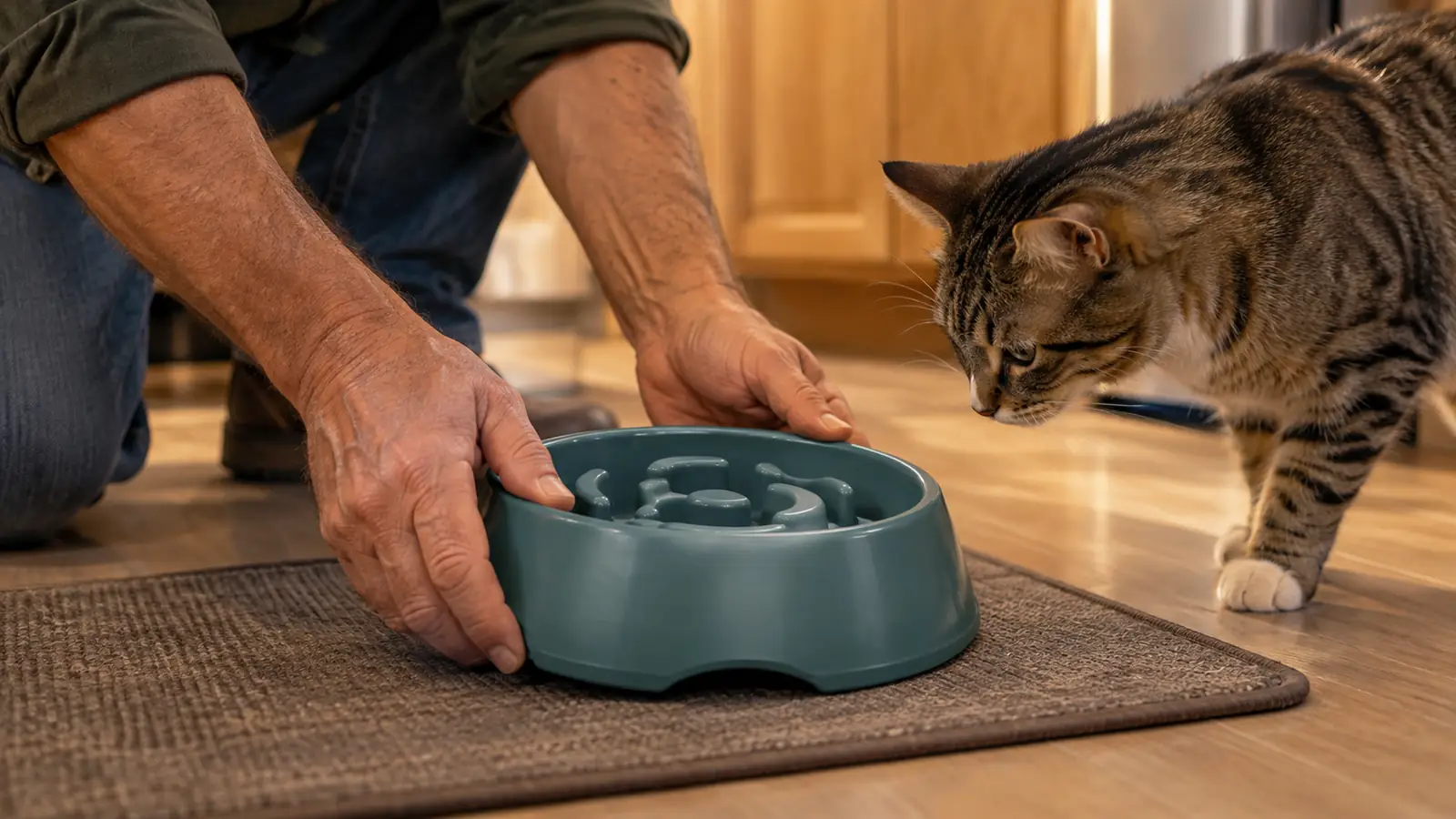
Once you know the pattern, the next question is which bowl to try. Not all slow feeders are the same, and the wrong one will just frustrate a cat. The Catstages bowl we use is a shallow five-inch bowl with raised ridges inside, and it holds about 3/4 cup of food. That size matters for two reasons. First, it fits a normal cat's whiskers without brushing them every time she dips her head, which some deep puzzle bowls do. Second, it works with both dry kibble and wet food, so you don't need two different dishes.
The ridges are the whole trick. Instead of scooping a mouthful of food in one go, Juniper has to eat around the bumps, which breaks her rhythm and forces her to slow down. It sounds almost too simple, but the mechanics are the same reason puzzle toys work: the cat has to work a little for each bite. When I set the bowl down for the first time, she walked a circle around it, sniffed the edges, and gave me a look that said I had made a mistake. Then she figured it out and ate her whole meal. It took her about four minutes instead of ninety seconds.
Cleaning is worth mentioning because a bowl that's a pain to wash won't get used. The Catstages bowl has no deep wells or hidden corners, so a quick rinse and a wipe handles most meals, and it's dishwasher safe on the top rack if you prefer. That matters more than it sounds. A slow feeder I tried years ago had narrow crevices that trapped wet food, and I stopped using it after two weeks because cleaning it took longer than the meal itself.
One thing I'd add from the clinic side: if your cat is a gulper because she's genuinely anxious about food, a slow feeder bowl is a tool, not a cure. It slows the eating, but it doesn't fix the worry underneath. That's why the next steps matter as much as the bowl itself.
Step 3: Switch bowls gradually, not all at once
Cats are creatures of habit, and a new bowl in the same spot can be enough to make a picky eater skip a meal. Juniper is eleven and set in her ways, so I didn't just swap dishes and walk away. For the first two days, I put her regular bowl in its usual spot and set the Catstages bowl a few feet away with a small handful of kibble in it. She ignored it the first morning, sniffed it the second, and by the third day she was eating her whole breakfast out of it.
Keep the feeding spot exactly where it's always been. Same corner of the kitchen, same time of day, same amount of food. The bowl is the only change. If your cat refuses the new bowl after a couple of days, try placing a piece of kibble or a dab of wet food on top of the ridges so she has to investigate. And don't move the water bowl at the same time. Change one thing at a time so you know what's actually working.
Step 4: Fill it the way it was designed, and stay close for the first meals
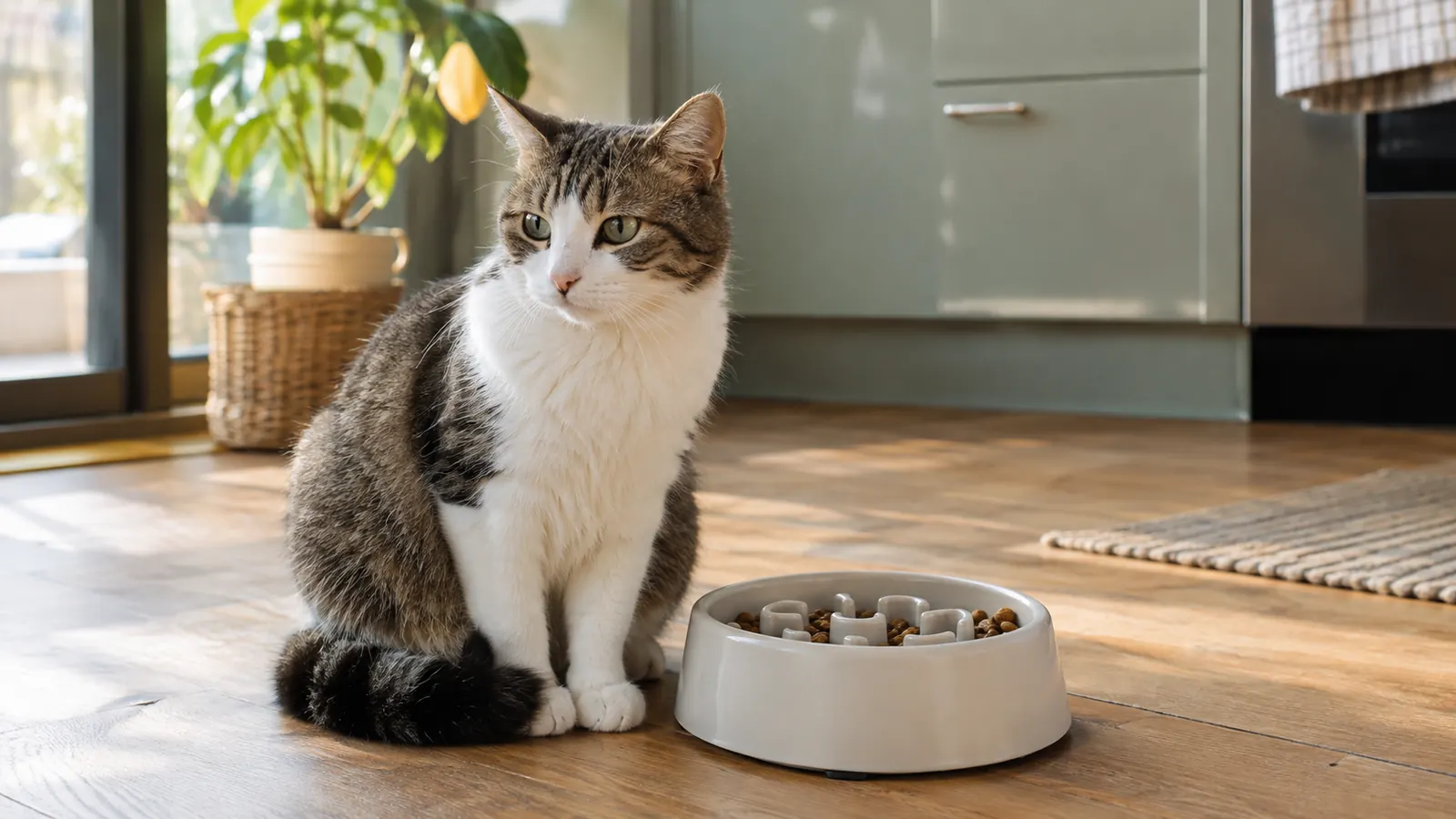
The Catstages bowl holds about 3/4 cup, and that's a portion, not a challenge. Don't pile food into a mountain over the ridges, because a determined cat will just eat around the pile. Spread the kibble evenly across the bottom so she has to pick it out of the channels. With wet food, press it lightly into the grooves the same way. The goal is to make every bite take a little effort, not to hide the food so well that she gives up.
Stay in the kitchen for the first few meals. The first time Juniper used it, she pawed at the bowl, flipped a piece of kibble onto the floor, and looked at me like the bowl was broken. Glen watched from the doorway and said it looked like a tiny maze, which earned him a look from Juniper. I nudged the kibble back in and she went back to work. Within a week she'd stopped pawing entirely. If your cat gets frustrated and walks away, that's normal for the first meal or two. Don't switch back to the old bowl the same day. Give her a day to learn it, and only go back to the old dish if she's genuinely refusing to eat.
Step 5: Watch what changes, and adjust her portions with your vet
The biggest change wasn't the eating speed, it was what came after. Juniper used to throw up after maybe one meal in three, little bits of undigested kibble, and I'd convinced myself it was normal for her. Within a week of switching to the slow feeder bowl, the after-meal vomiting stopped almost completely. She still eats faster than a polite houseguest, but she goes from bowl to water dish to a sunny spot on the rug instead of bowl to carpet in a hurry.
That's also the moment to talk about portions. Juniper had gotten a little chunky the year before, and part of the gulping was that she thought dinner was a race she might lose. Once she slowed down, she seemed more satisfied with the same amount of food, and she stopped crying for more ten minutes after the bowl was empty. If your cat is eating faster than she should, check the portion size on the food bag and ask your vet what your cat actually needs. A slow feeder bowl helps with how she eats, but only you and your vet can decide how much.
If your cat is on a weight loss plan, this bowl is a good partner for it. Juniper's vet asked us to trim her portions, and the slow feeder bowl made smaller portions feel more like a meal because she had to work for every bite. She stopped acting hungry ten minutes after dinner, which made it easier for me to stick with the plan.
What Else Helped Juniper Slow Down
The bowl did the heavy lifting, but it wasn't the only thing. I split Juniper's daily food into three smaller meals instead of two bigger ones, which took the edge off her hunger and gave her fewer reasons to race. I also moved her water bowl to the other side of the kitchen, away from the food, which encouraged her to take a few extra steps between bites. And on days when I'm home, I hide a few pieces of kibble in a simple puzzle feeder for her afternoon snack. She gets the satisfaction of working for her food without me spending anything fancy.
One more habit that helped: I stopped leaving dry food out all day. Juniper free-fed for years, and I think it made her anxious about food because she never knew when the bowl would be refilled. Once we moved to set mealtimes with the slow feeder bowl, she relaxed. She still reminds me when dinner is close, but she doesn't act like every meal might be her last.
One more thing I tell people at the clinic: if your cat is a fast eater and a frequent vomiter, don't just buy a bowl and hope. Make an appointment. There are medical reasons a cat throws up, and they deserve a proper check before you assume it's a speed problem. For a healthy cat who just eats like a starving orphan, a slow feeder bowl plus smaller, more frequent meals is the combination I'd try first.
Juniper went from finishing her dinner in ninety seconds to taking close to five minutes, and the after-meal vomiting I'd written off as normal stopped within a week.
If you try all of this and your cat still throws up, or if she stops eating entirely, call your vet. A slow feeder bowl is a simple tool, not a medical treatment. But for a healthy cat who just eats too fast, it's the cheapest fix I know, and it's the one I'd start with. Give it a week. That's about how long it took Juniper to stop racing through dinner, and she's the most stubborn eater I've ever lived with.
Give the slow feeder bowl a week and watch what changes
The Catstages Kitty Slow Feeder Bowl is an inexpensive, easy-to-clean bowl that worked for a stubborn eleven-year-old tabby who had been gulping her food for years. If your cat eats like dinner is a race, this is the easiest place to start.
Amazon Check Today's Price on Amazon →